
The Charm of the Qashqai
Nothing stirs my imagination quite like the sight of black goat hair tents dotting the landscape of south west Persia, no clue given to the warmth of the people and vibrancy of colour inside…


The Qashqai are a proud nomadic tribe located in south west Persia. More accurately, they are a conglomeration of tribes descended from Turkic peoples who arrived in Iran from central Asia around the 11th or 12th century.
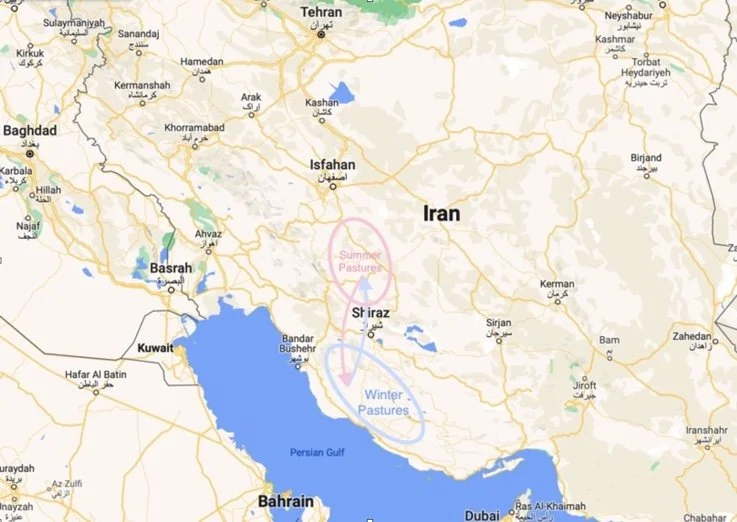
Despite government efforts from the 1960s to incorporate this minority group into mainstream Iranian society, many have resisted and have retained their nomadic lifestyle. Every year, they travel with their flocks of sheep from summer highland pastures north of the town of Shiraz to winter pastures on lower (and warmer) areas near the Persian Gulf, roughly 500km to the south.
Weaving has always been a major part of the Qashqai tradition, using the fabulous wool from their sheep and natural dyes to produce rugs, kilims, bags and decorative items. The weaving is done almost exclusively by the women of the tribe on horizontal looms which can be quickly disassembled. As Walter A. Hawley said in his 1913 book "No wool in all Persia takes such a rich and deep colour as the Shiraz wool. The deep blue and the dark ruby red are equally extraordinary, and that is due to the brilliancy of the wool, which is firmer and, so to say, more transparent than silk, and makes one think of translucent enamel”.
The designs are woven from memory (hence the asymmetric nature of Qashqai rugs) and passed from each generation to the next.

Because of the intrinsic quality of the wool and the artistry of the designs, antique Qashqai rugs can age quite beautifully and have become sought after. Here are a few of my favourite examples:
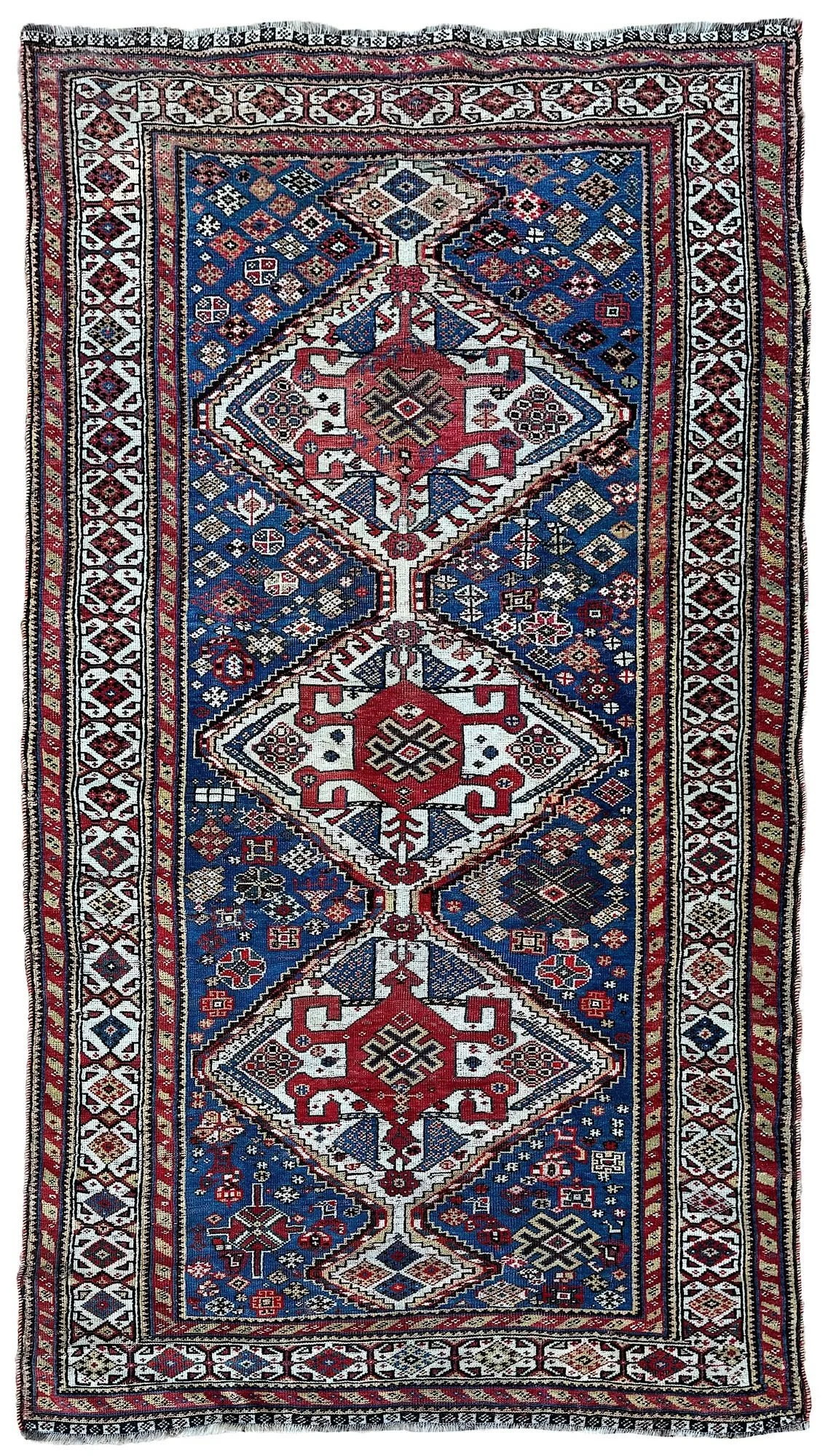
A wonderful antique tribal rug, woven by the nomadic Qashqai tribe circa 1900. The design features three geometrical medallions on a mid indigo field surrounded by an ivory border. Finely woven for a tribal rug with a wonderfully asymmetrical design and great colours.
Size: 1.86m x 0.97m (6ft 1in x 3ft 2in)
This rug has moderate, even wear slightly heavier in a few areas (see photos). Fringes and selvedges are secure and it has been professionally cleaned.
Free worldwide shipping.
All our rugs are covered by our comprehensive returns policy
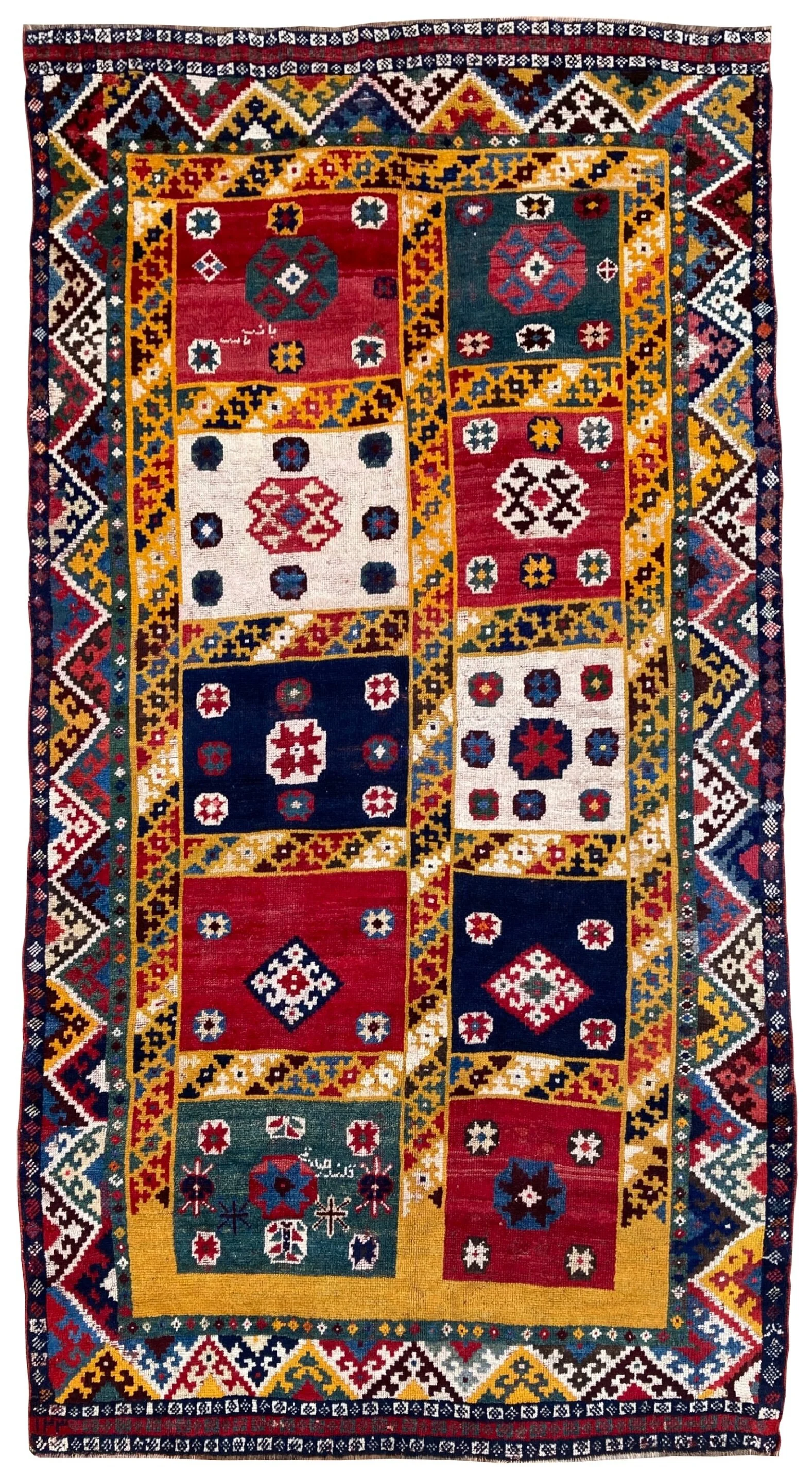
An exceptional antique Gabbeh rug, handwoven by the nomadic Qashqai tribe circa 1900 with a geometrical design on a saffron yellow field and great secondary colours. Signed by the weaver, Galander Sed Gir. There are a couple of interesting elements within the design - the first is the way the diagonal design on the yellow field suddenly stops which would indicate that the weaver changed her mind whilst weaving the rug. The second is in the bottom left of the rug where the numbers ‘123’ are woven - no idea what this may signify but I would love to know what was going on in her mind! A fantastic example of tribal art and highly collectible.
Size: 2.68m x 1.42m (8ft 10in x 4ft 8in)
This rug is in good condition with light even wear, slightly heavier in a few small places (see photos). Fringes and selvedges are secure and it has been professionally cleaned.
Free Worldwide Shipping.
All our rugs are covered by our comprehensive returns policy
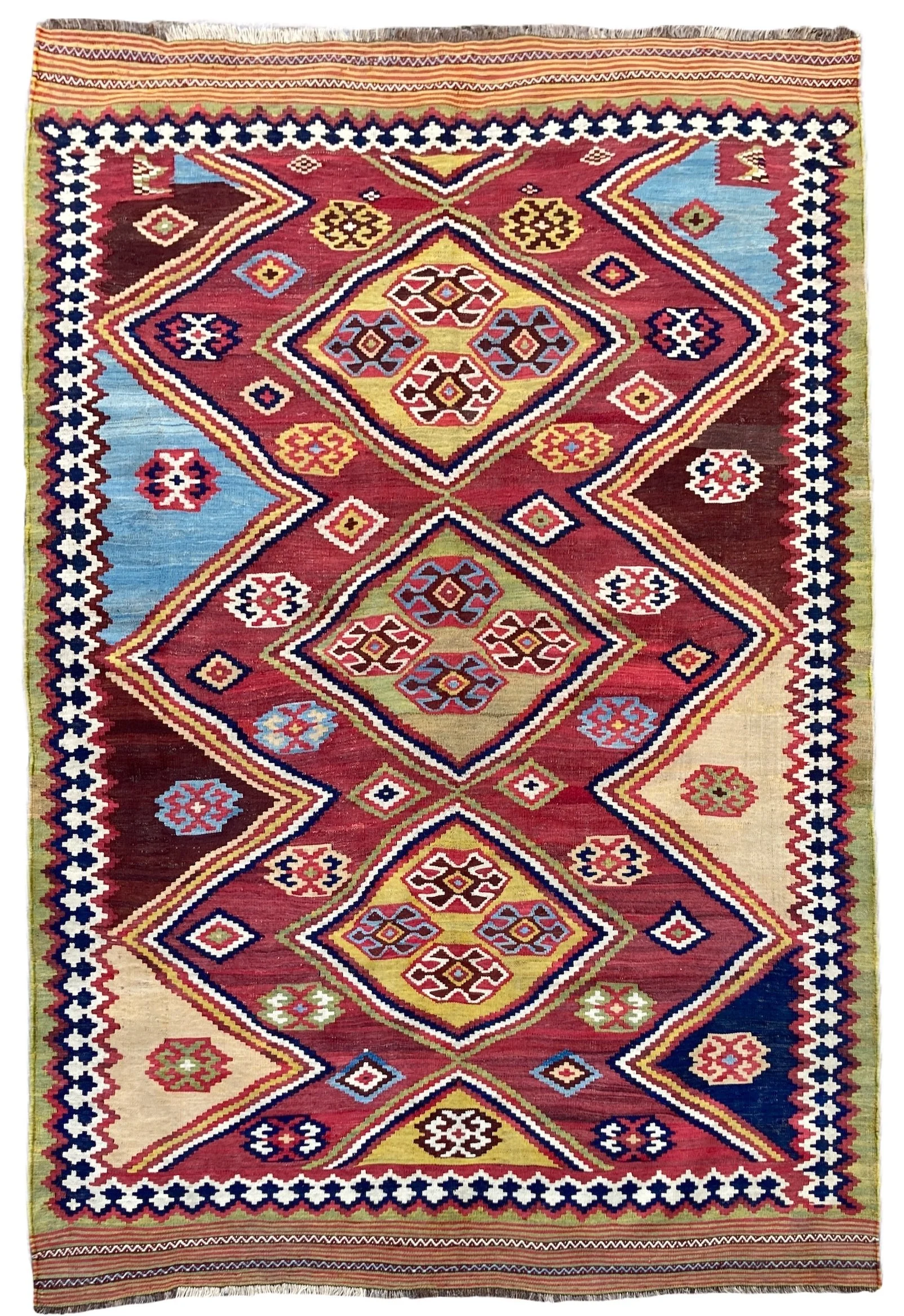
An exceptional antique Qashqai kilim, woven by the eponymous nomadic tribe circa 1890. This kilim features a geometrical 3 medallion design on a terracotta field. An unusually small size with fabulous natural colours and a highly collectible and decorative piece.
Size: 2.02m x 1.37m (6ft 8in x 4ft 6in)
This kilim is in very good condition with light, age-related wear. Fringes and selvedges are original and secure and it has been professionally cleaned.
Free worldwide shipping.
All our rugs are covered by our comprehensive returns policy